How to Play Texas Hold’em Poker - Rules, Game Flow & Hand Rankings
Texas Hold’em is the world’s most popular poker variant. It’s easy to learn but hard to master. This guide explains the basic rules of Texas Hold’em, including how betting works, how a hand plays out, and how to form the best five-card hand using your hole cards and the board.
Texas Hold’em is a community card poker game. Each player is dealt two private cards (hole cards), and five community cards are placed face-up on the board. Players must make the best five-card poker hand using any combination of their two hole cards and the five community cards.
The game is played with forced bets (blinds), structured betting rounds, and typically follows a no-limit format.
Basic Rules of Texas Hold'em
Game Format
2 to 10 players per table
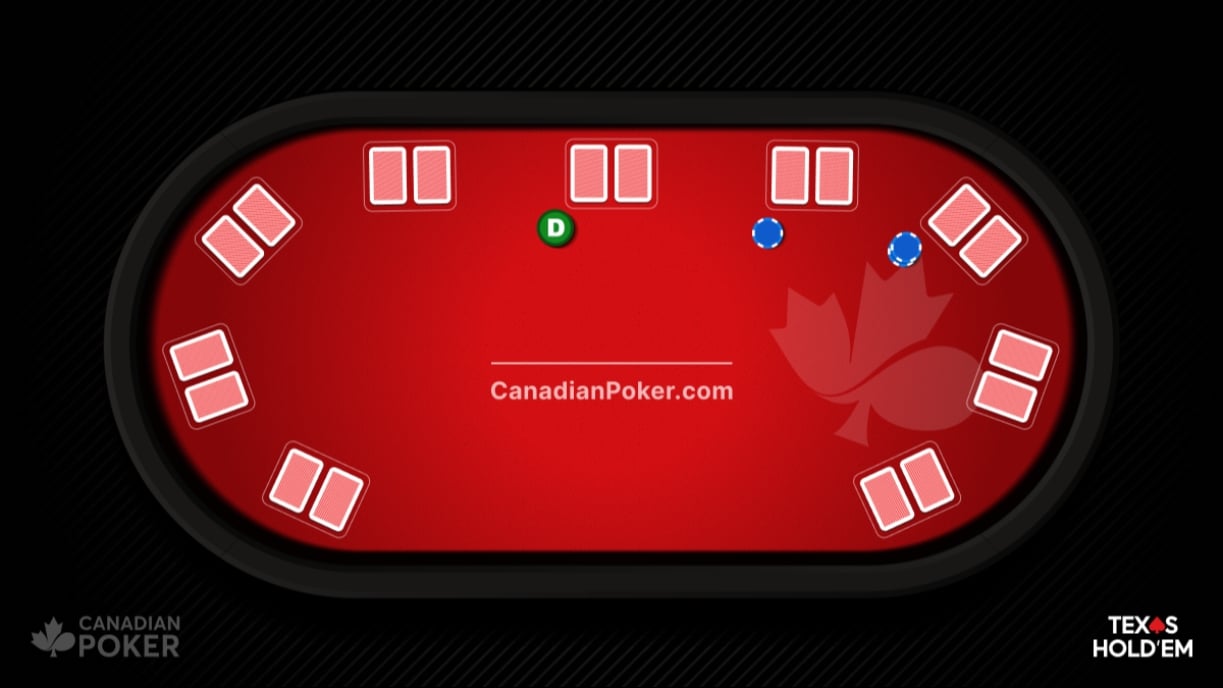
Each player is dealt 2 hole cards
5 community cards are shared among all players
Best five-card hand wins the pot
No-limit betting is standard (but limit and pot-limit formats exist)
Dealer (Button), Blinds and Player Positions
The Dealer Button
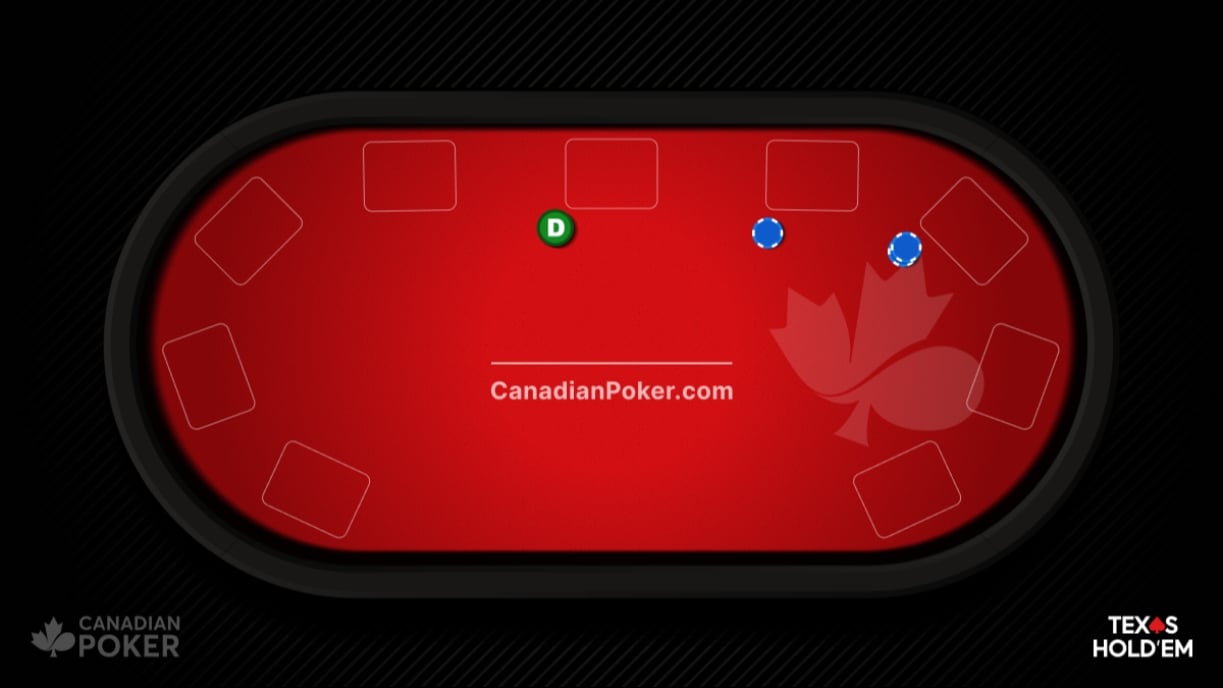
The dealer button (often just called “the button”) is a small round disc that rotates clockwise around the table after each hand. It shows which player is considered the dealer for the current hand, even in games with a professional or automated dealer.
The button is important because it determines:
Who posts the small blind and big blind
The order of betting, which, in texas hold'em, starts with the player left of the big blind
After each hand is completed the button moves one seat to the left, the two players to the left of the new button post the small blind and big blind. The cards are dealt again, starting with the player to the left of the button.
This rotation ensures everyone takes turns being in early, middle, and late positions, making the game fair over time.
The Blinds
In Texas Hold'em, blinds are forced bets posted before the cards are dealt. They help create action by building a pot right from the start.
There are two types of blinds:
Small Blind (SB) – Posted by the player to the left of the dealer.
Big Blind (BB) – Posted by the player to the left of the small blind, and it's typically double the small blind.
The Player Positions
The player position refers to where you sit relative to the dealer button, and it has a huge impact on your strategy. Since players act in order, your position determines whether you act early or late in a betting round.
There are three main types of positions:
Early Positions - These players act first after the flop, which is a disadvantage because they have the least information about what other players will do.
Middle Positions - You're acting after the early players, but before the late players. You have a bit more information but still need to be cautious. Late Positions - These are the most powerful seats, because you get to act after most other players, giving you more information.
And then we have the blinds. Although they are not always classified by position, these two are unique:
Small Blind (SB): Acts second-to-last pre-flop, but first on every other street.
Big Blind (BB): Acts last pre-flop (if no raise), but second post-flop.
These positions are tricky to play because you’ve already invested money and have to act early post-flop.
How a Hand of Texas Hold’em is Played
1. Blinds are posted (small blind and big blind)
2. Each player is dealt 2 hole cards
3. First betting round (pre-flop), begins with the player left of the big blind. Players can choose to call (same amount as the big blind), raise any amount of their stack or fold their hand. If one player calls or raises, the remaining players can choose to call the raise, re-raise or fold.
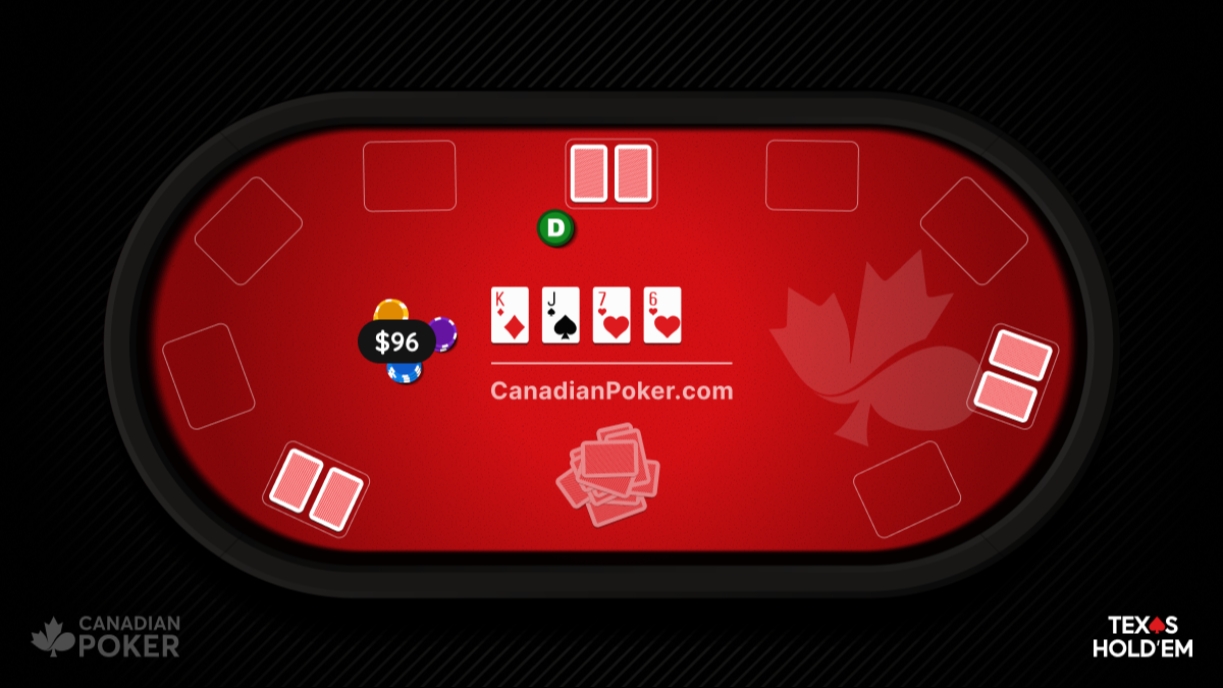
4. The flop is dealt. (3 community cards are put faced up in the middle of the table) The remaining players now starts building their hand using the board and their hole cards to form the best possible five card hand.
5. Second betting round, starting with the player left of the dealer button. The remaining players can choose to check or bet any amount left in their stack. If one player bets, the remaining players can choose to call the bet, raise or fold.
6. The turn is dealt (4th community card)
7. Third betting round, starting with the player left of the dealer button. The remaining players can choose to check or bet. If one player bets, the remaining players can choose to call, raise or fold.
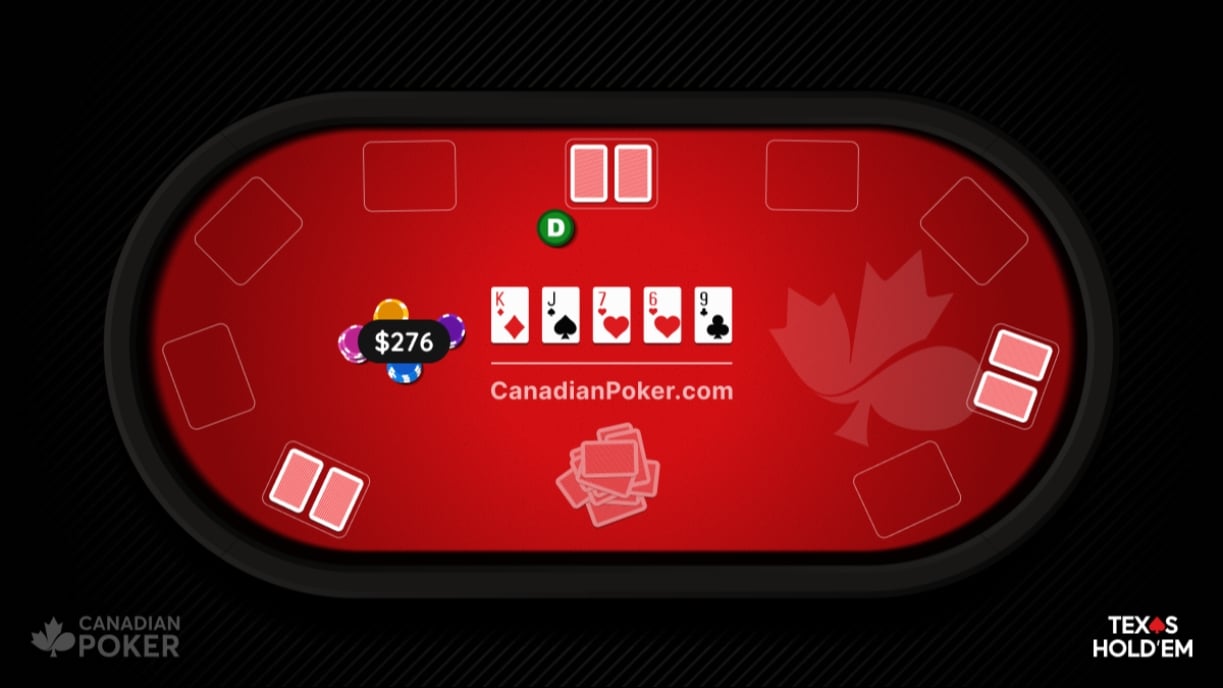
8. The river is dealt (5th and final community card)
9. The final betting round starts, again with the player left of the dealer button. The remaining players can choose to check or bet any amount left in their stack. If one player bets, the remaining players can choose to call, raise or fold.
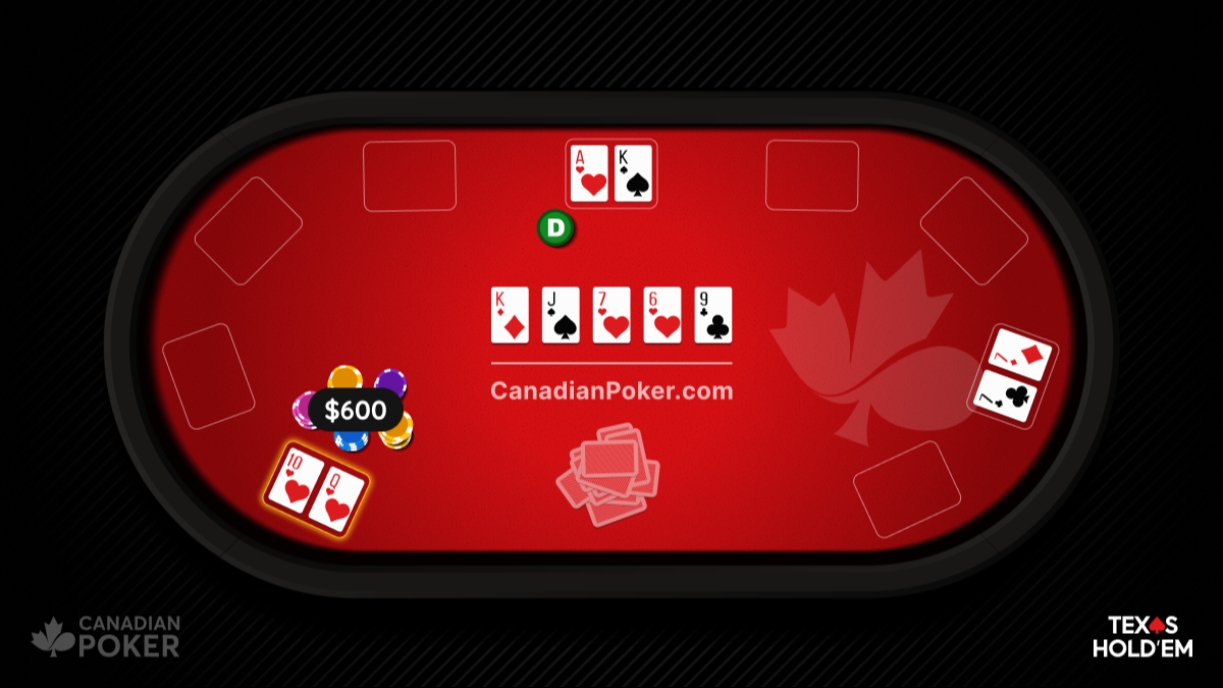
10. Showdown. Players reveal hands and the best five card hand win. In this example, Player 1 wins with a straight 9-K, using Q, T from his hand and K, J, 9 from the board. Player 2 has a pair of Kings with an Ace kicker (his best five card hand is AKKJ9). Player 3 has three of a kind 7´s (his best five card hand is 777KJ)
Betting Rounds and Betting Actions
In Texas Hold’em, every hand is divided into betting rounds where players take turns deciding how to act based on their cards and position. During each round, you can check, bet, call, raise, or fold - depending on the action before you.
Understanding these betting rounds and actions is essential for reading the table, managing your chips, and making strategic decisions throughout a hand.
Available Actions
Fold: Surrender your hand and leave the pot
Check: Pass the action without betting (only if no bet has been made)
Bet: Place the first wager in the round
Call: Match the current bet
Raise: Increase the size of the current bet
All In: Bet your whole stack of chips
Betting Rounds
Pre-flop (after hole cards are dealt)
Flop (after 3 cards are dealt)
Turn (after 4th card is dealt)
River (after 5th card is dealt)
No-Limit Betting
In No Limit Hold’em, a player can bet any amount up to their entire stack at any time during their turn.
Hand Rankings in Texas Hold’em
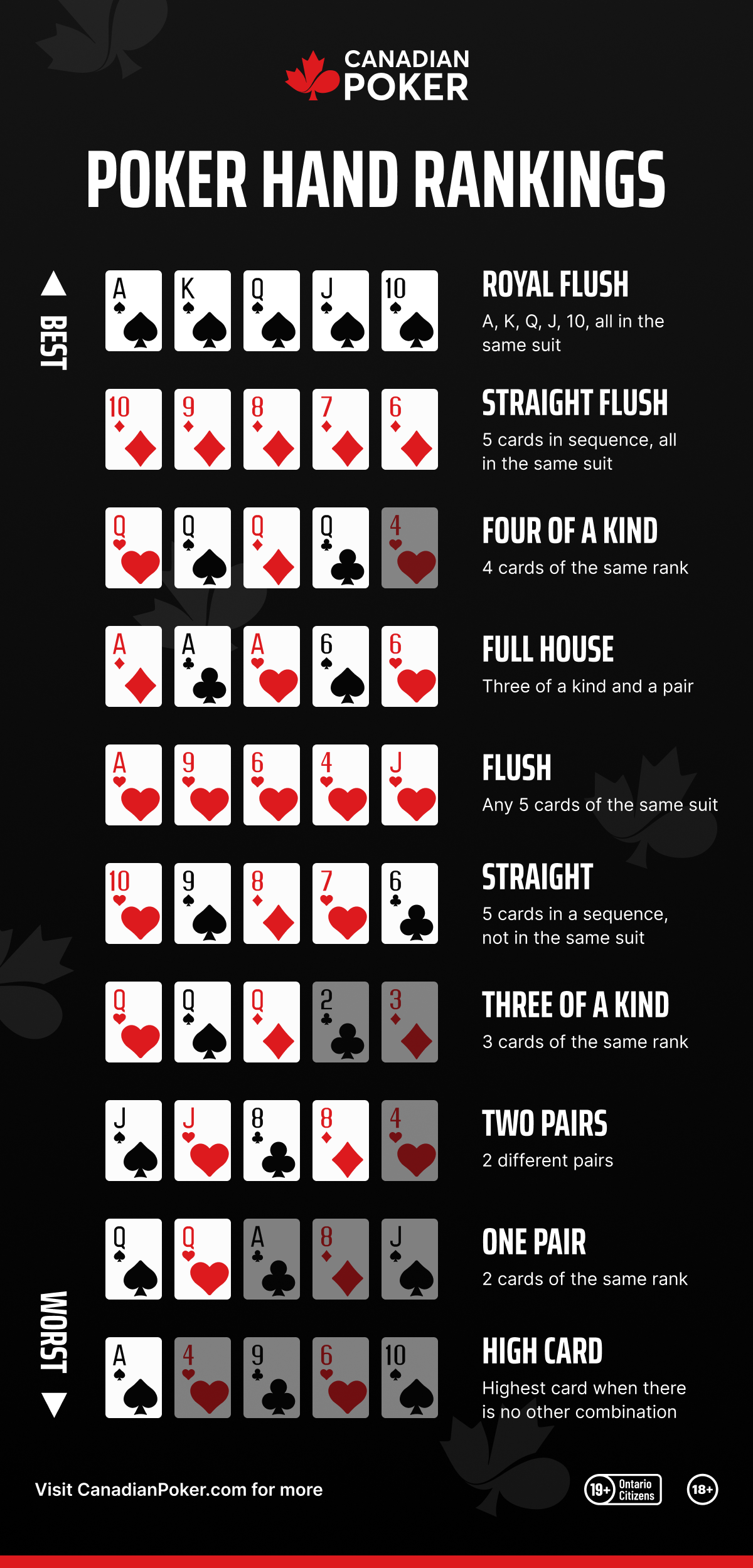
Texas Hold’em uses traditional high-hand poker rankings. Players can use any combination of hole cards and board cards to make the best five-card hand.
Hand Rankings from Best to Worst
Showdown Rules
At the showdown in Texas Hold’em, all remaining players reveal their cards to determine who has the best five-card hand. The player who made the last aggressive action (bet or raise) shows their hand first. If there was no betting on the final round, the player closest to the left of the dealer button reveals first. The best hand wins the po. if there’s a tie, the pot is split equally among the winners.
Worth to know is that 10♣Q♥ gets a tie with 5♠10♠ or any other hand that includes a ten when the board reads K♣A♠J♦Q♦4♠ as you only need to use one card from your hand together with the board to make the best full hand.
When Does a Showdown Occur?
After the final betting round on the river
All remaining players reveal their hole cards
Best five-card hand wins the pot
Using Hole Cards
Players can use both, one, or even none of their hole cards to build their best possible hand.
Variants of Texas Hold’em
No Limit Holdem
Most used format of Texas Hold´em
No limitation of betting size, players can bet their entire stack at all times
Pot Limit Holdem
In Pot Limit Hold'em the maximum bet is the current size of the pot
Texas Hold’em is the most iconic poker game in the world, and for good reason. Its simple structure, strategic depth, and explosive potential make it appealing to beginners and pros alike. Once you learn the basic rules and hand rankings, you’re ready to sit down and play in any setting, from home games to online cash tables.
Knowing how a Hold'em hand works is only the first step. Our poker strategy guide explains how position, starting-hand selection, ranges, pot odds, bet sizing and stack depth affect the decisions you make at the table.
Texas Hold'em Rules FAQ
How many hole cards do you get in Texas Hold’em?
Each player receives two private cards (hole cards).
How many cards are on the board?
Five community cards are dealt face-up: the flop (3), the turn (1), and the river (1)
Can you use both hole cards in Texas Holdem?
Yes, you can use both, one, or even none of your hole cards depending on the board.
Who acts first pre-flop
The player to the left of the big blind acts first during the pre-flop round.
What’s the difference between No Limit and Limit Hold’em?
In No Limit Holdem, you can bet all your chips at any time. In Limit Holdem, bets and raises are fixed amounts.